


/
Languages:
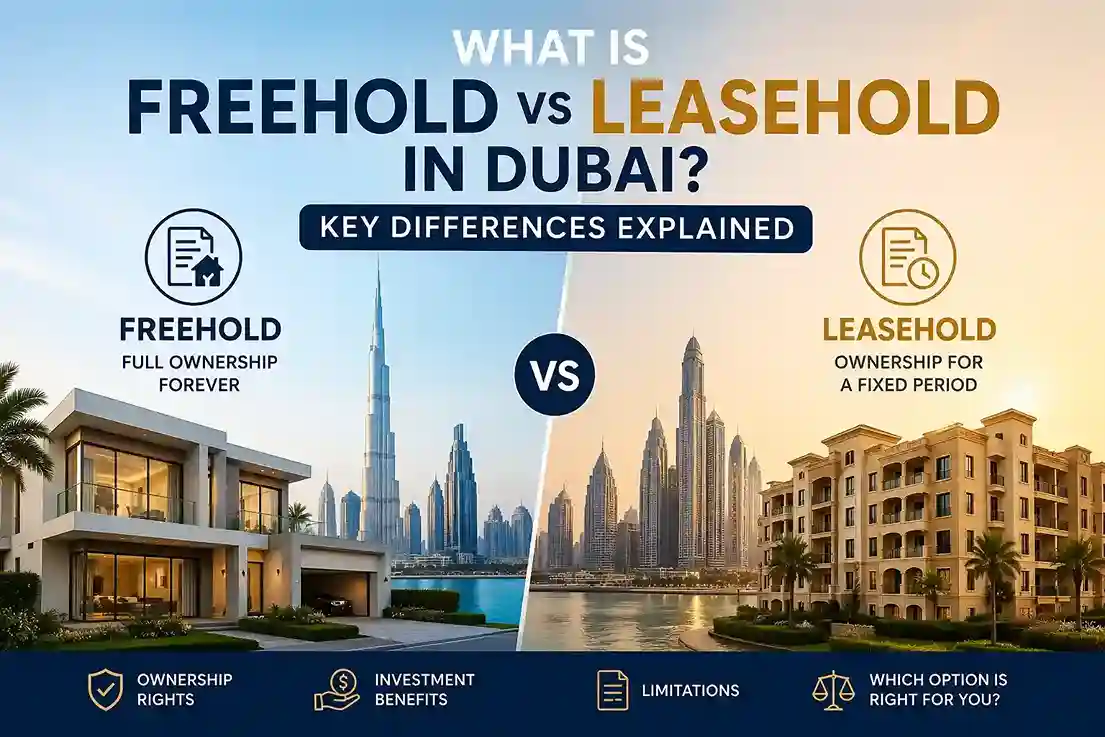
If you’re planning to buy property in Dubai, one of the first terms you’ll encounter is freehold vs leasehold. Understanding the difference is crucial because it affects your ownership rights, resale potential, inheritance, and long-term investment value.
Here’s a simple guide to help you make an informed decision.
What Is a Freehold Property in Dubai?
A freehold property gives you complete ownership of both the property and the land it stands on, with no time limit.
As a freehold owner, you can:
This is the most popular ownership type among foreign investors.
Example:
If you buy an apartment in Dubai Marina or a villa in Dubai Hills Estate, you typically own it as a freehold asset.
These areas are popular due to strong rental demand and capital appreciation
A leasehold property gives you the right to use a property for a fixed period—usually 10 to 99 years—while the land remains owned by the freeholder.
After the lease ends, ownership rights may revert unless renewed.
As a leasehold owner, you can:
But you do not own the land permanently.
Example:
If you purchase a leasehold apartment with 50 years remaining, future buyers may value it less as the lease shortens.
Common Leasehold Areas in Dubai
Leasehold properties are often found in older or selected residential zones.
Freehold: Lifetime ownership
Leasehold: Ownership for a fixed lease term
Freehold: Full control
Leasehold: Limited by lease agreement terms
Freehold properties generally attract stronger buyer demand and better resale value.
Leasehold values may decline as lease years reduce.
Banks usually prefer financing freehold properties.
Leasehold may come with stricter lending conditions.
For most buyers and investors, freehold property in Dubai is the preferred option because it offers:
✔ Full ownership
✔ Better long-term appreciation
✔ Easier resale
✔ Strong inheritance rights
✔ Higher investor confidence
Leasehold can still work for buyers prioritizing lower entry costs in established communities.
What to Check before Buying
Before purchasing any property in Dubai, always check:
1. Ownership Type
Confirm whether the property is freehold or leasehold.
2. Title Deed
Verify ownership through Dubai Land Department records.
3. Service Charges
Review annual maintenance and community fees.
4. Developer Reputation
Choose developers with strong delivery records and market credibility.
5. Exit Strategy
Ask yourself: Will this property be easy to rent or sell later?
Choosing between freehold and leasehold properties in Dubai is about understanding what aligns with your goals.
If you’re looking for long-term wealth creation, rental income, and stronger asset security, freehold is usually the smarter option.
The best investment decisions start with clarity—and knowing exactly what you’re buying.
At Homes Partner, we help buyers identify the right communities, verify legal details, and choose properties with strong investment potential.
Whether you're buying your first Dubai home or expanding your portfolio, our team can guide you every step of the way.
Discover what the Dubai Land Department (DLD) and RERA do to protect real estate buyers in the UAE. Learn about escrow accounts, Oqood registration, and safe investing.
Learn how the Dubai mortgage process works for expats in 2026. Discover eligibility, LTV ratios, interest rates, required documents, costs, and expert tips for securing a home loan.


 What Is the Dubai Land Department (DLD)? Buyer Rights & Protection Guide
 How Does the Dubai Mortgage Process Work for Expats? (Complete Guide)
 What Is Freehold vs Leasehold in Dubai? Key Differences Explained
 How to Buy Property in Dubai as a Foreign Investor Golden Visa Requirements & Step-by-Step Guide